Bookvise Start learning
A focused workspace for self-learners

Read with depth.
Recall with confidence.

Bookvise pairs beautifully structured eBooks with the practice tools that turn reading into knowledge — section notes, visual guides, flashcards, quizzes, and timed mock tests, all in one focused workspace.

Notes

Section-by-section, ready to re-read.

Hierarchical, annotated notes with definitions, key insights, and pull-out diagrams. Highlighted phrases mark exactly what to recall.

  • Concept-by-concept structure
  • Key terms ready to revisit
  • Quick Revision Sheets for the night before
Illustrations

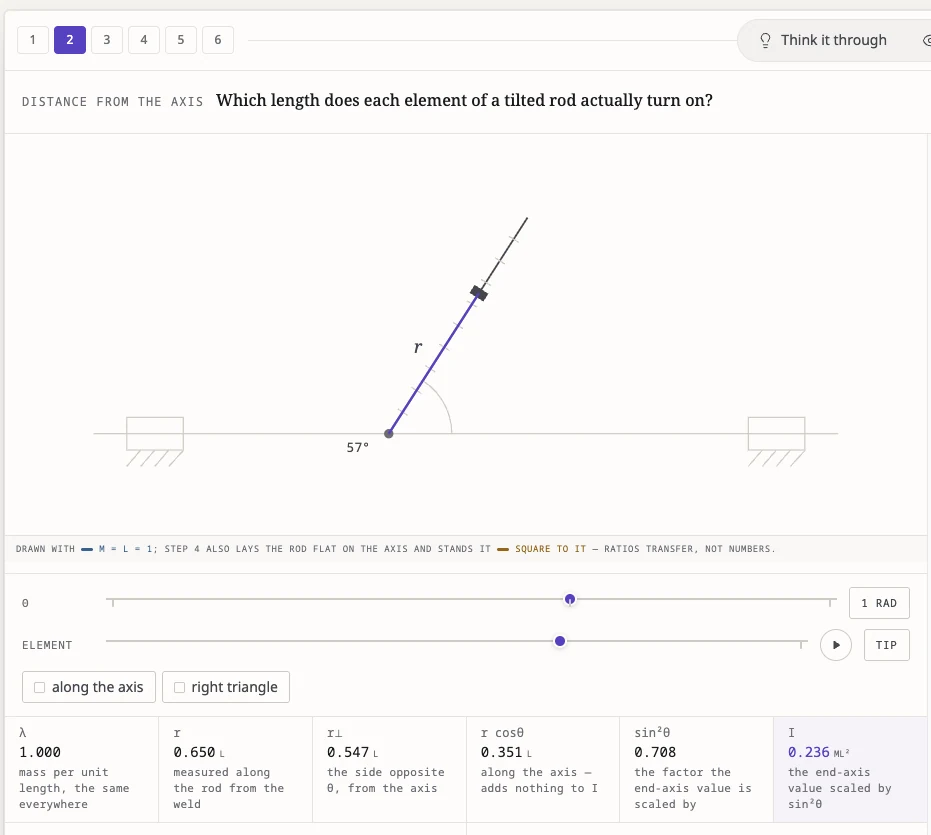
Diagrams that respond.

Subject-tuned figures live next to the lesson. Many are interactive — close a switch, watch the compass deflect; trace the path, see the labels appear.

  • Inline, captioned, citable
  • Interactive figures where it matters
  • Step-by-step callout layers
Questions

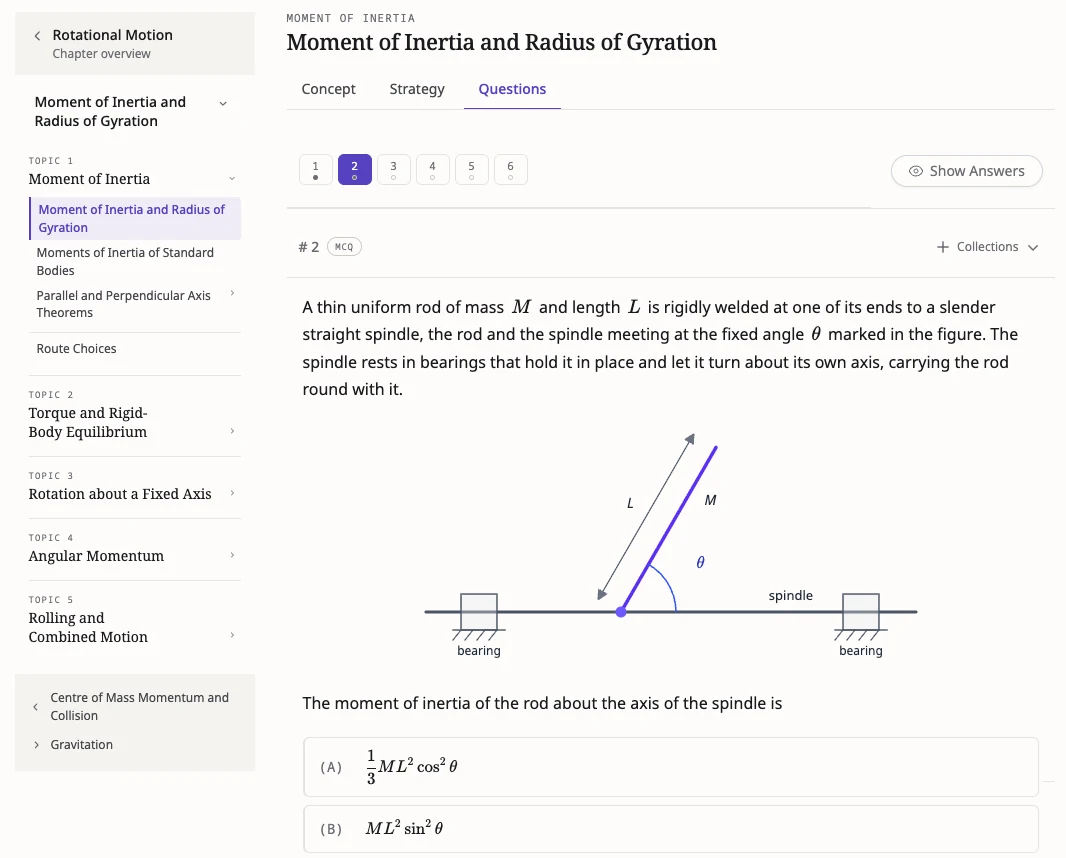
Practice that sits next to the lesson.

Multiple-choice questions live inside each section, with explained answers. Wrong picks feed straight into your revision deck.

  • In-section MCQs with full approach
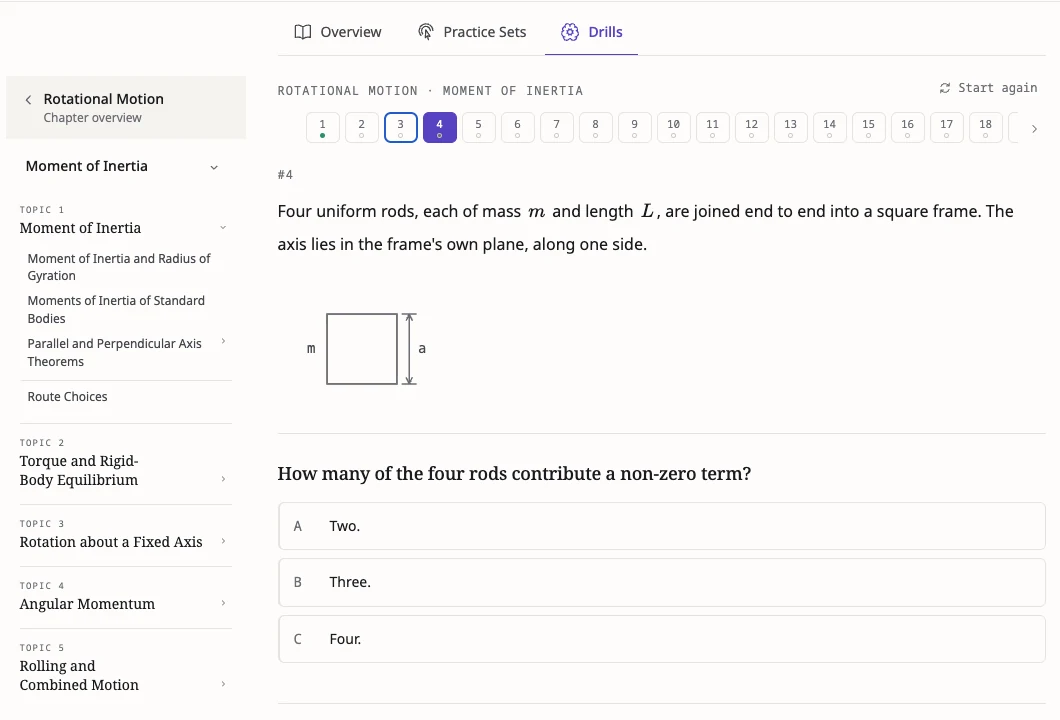
  • Curated practice sets, by topic
  • Printable papers for offline study
Flashcards

Cloze recall, on a steady schedule.

Bookvise flashcards aren't front-and-back trivia. They're cloze cards — a sentence with the key phrase blurred out. Tap to recall.

  • Tap any blurred phrase, in context
  • Spaced repetition across all books
  • Streaks & due-today nudges
A live slice of the app
Try a theme
Books Science NCERT (8) Electricity: Magnetic and Heating Effects
1 Magnetic Effect of Electric Current

When electric current flows through a conductor, it creates a magnetic field around it — an invisible region of magnetic influence. The field exists only while current flows; when current stops, the field vanishes instantly. Discovered by Hans Christian Oersted in 1820, this link between electricity and magnetism is the basis of electromagnets, electric bells, motors, and more.

Key insight
The magnetic field depends on current flow, not the conductor's material — iron, copper, and aluminium coils all deflect a compass when current flows through them.
Magnetic Field
The region around a magnet or current-carrying wire where its magnetic effect can be detected — for example, by the deflection of a compass needle placed in that region.
  • Sources — bar magnets and current-carrying conductors of any material
  • Detected by — a compass needle deflecting from its resting N-S direction
  • Transient — for a conductor, the field exists only while current is flowing
Earth as a giant magnet
Deep inside Earth, the movement of liquid iron in the outer core creates electric currents — and, by the magnetic effect of electric current, these currents generate a magnetic field. That's why a compass needle points north, and why migratory birds, fish, and sea turtles can navigate across continents.

Hans Christian Oersted's accidental 1820 discovery — that a compass placed near a current-carrying wire deflects from N–S — was the first observation that linked electricity and magnetism. Within a few decades it grew into the theory of electromagnetism, and into devices that quietly shape modern life: electric motors, doorbells, MRI scanners, the speakers in your phone.

Compass deflection · interactive figure 1 / 6 figures
Field lines around a current-carrying wire 2 / 6 figures
# 4 of 12 · in-section question tap an option

When does the magnetic field around a current-carrying wire exist?

AAlways — even when the switch is open
BOnly while current is flowing
COnly with iron or copper wires
DOnly after the wire becomes warm
tap an option to reveal the answer & explanation
Why it's B
The magnetic field is produced by moving charges. Stop the current, the field vanishes — the compass returns to N–S. The wire's material doesn't matter; iron, copper, and aluminium all behave the same.
# 5 of 12 · in-section question ✓ correct · 12 s

A coil of which material will not deflect a compass when current flows through it?

AIron
BCopper
CNone — every coil deflects
DNichrome
Why it's C
Magnetic effect depends on the moving charges in the wire, not the wire's material. Any conductor — iron, copper, aluminium, nichrome — will produce a magnetic field when current flows through it.
Card 3 of 12 · cloze recall due today
Magnetic effect

A current-carrying conductor produces a magnetic field around it — an invisible region detectable by a compass. The field exists only while current is flowing and vanishes the moment it stops.

tap a blurred word to recall · or use reveal all last reviewed 4d ago
12 cards in this set · 3 due today Mark all reviewed
1 A current-carrying conductor produces a magnetic field around it. reviewed
2 The field exists only while current is flowing. reviewed
3 A current-carrying conductor produces a magnetic fieldcurrent flowing due today
4 A compass needle deflects from N–S when… current flows. due today
5 The right-hand rule: thumb along… fingers curl with the field. due today
6 Field strength falls off with distance from the wire. in 3 days
7 Oersted's 1820 discovery linked electricity and magnetism. in 5 days
Beyond a single section

And when you're ready to test yourself.

Each book ships with chapter-wide assessments and personal collections that follow you from one section to the next.

Timed quizzes

Practice MCQs against the clock — pause, skip-back navigation, and a per-question report at the end. Practice mode for confidence; mock mode mirrors the real exam.

  • Pause, jump between questions, resume later
  • Per-question report with timing breakdown
  • Practice & mock modes per chapter

Mock tests

Full-length, exam-sized assessments built from the whole book. Sit one paper in a single go and walk away with a report card — strengths, weak topics, and time on every question.

  • Real exam length and difficulty
  • Strengths & weak-topic breakdown
  • Time-spent analysis, question by question

Question papers

Curated MCQ and long-form papers, ready to attempt online or print as a clean PDF. Past-year papers, topic-wise sets, and your own custom selections — saveable for offline study.

  • MCQ and long-form formats
  • Print-friendly PDFs, distraction-free
  • Filter by topic, difficulty, or year

Revisions

Pull cards, questions, and exercises from anywhere in any book into a named revision set. Open it the night before exam day — only what you flagged, only what matters most.

  • Cross-book curation, one item at a time
  • One-tap "add to revision" from any card
  • Resume from where you left off

Books to start with.

Curated NCERT eBooks, with more added each month.

See all books
NCERT · Class 8

Science

14 chapters · 96 sections · 380 questions

NCERT · Class 9

Science

15 chapters · 102 sections · 410 questions

NCERT · Class 10

Science

16 chapters · 110 sections · 440 questions

NCERT · Class 10

Mathematics

15 chapters · 98 sections · 520 problems

NCERT · Class 11

Physics

15 chapters · 132 sections · 610 questions

NCERT · Class 11

Chemistry

14 chapters · 125 sections · 540 questions

NCERT · Class 11

Biology

22 chapters · 168 sections · 700 questions

NCERT · Class 12

Mathematics

13 chapters · 92 sections · 480 problems

Build better conceptual models with Bookvise.

Begin learning